
Introduction
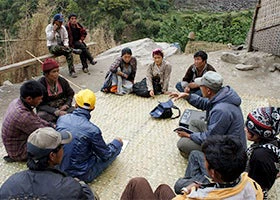
This article is authored by the Chairperson of Prestige Consulting Kedar Joshi in collaboration with Lena Krylova, and was originally published on the World Bank End Poverty in South Asia blog.
It explores how ordinary citizens can play an active role in improving the quality of school education in rural Nepal through structured community participation tools.
The insights shared here are based on field implementation experience with community schools in Nepal.
Originally published on:
World Bank Blogs – End Poverty in South Asia
All credit for publication and distribution goes to the World Bank Group. The insights represent field-based experiences and research contributions from the authors.
Education Challenges in Rural Nepal
Rural education systems in Nepal often face structural challenges such as:
- Teacher absenteeism and irregular attendance
- Lack of transparency in school budgets
- Political influence in school management
- Weak accountability mechanisms
- Limited communication between schools and communities
These issues contribute to declining trust in public education systems and uneven learning outcomes.
Community Score Card as a Solution
The Community Score Card (CSC) is a participatory social accountability tool designed to improve transparency and dialogue between schools and communities.
It enables:
- Parents
- Students
- Teachers
- School management committees
to jointly assess school performance and identify improvements collaboratively.
Rather than being a monitoring tool alone, it functions as a dialogue mechanism for reform.
Implementation in Nepal
The initiative was implemented in 21 community schools in Nawalparasi district with support from the Vijaya Development Resource Center (VDRC).
Key implementation details:
- Time period: December 2011 – September 2012
- Two-phase execution model
- Focus on rural mid-hill and Terai regions
- Community-led monitoring and evaluation
Key Issues Identified Through the Process
During implementation, the following issues were consistently identified:
- Reduced teacher presence in classrooms
- Late class commencement and reduced teaching time
- Excess focus on non-academic activities
- Lack of clarity on school income and expenditure
- Misunderstandings between parents and school management
These issues highlighted the need for structured accountability mechanisms.
Outcomes and Improvements
Following the introduction of the Community Score Card approach, several improvements were observed:
- Significant improvement in teacher attendance in multiple schools
- Increased transparency in school budget allocation
- Stronger involvement of parents in school planning
- Reduced conflict between stakeholders
- More structured school investment planning processes
Community Participation and Local Ownership
One of the strongest outcomes of the initiative was increased community ownership.
Communities:
- Actively participated in school improvement discussions
- Contributed resources through local initiatives and cultural fundraising activities
- Developed a clearer understanding of school budgets and constraints
- Supported infrastructure and learning environment improvements
This strengthened trust between schools and local populations.
Impact on Students
The initiative also contributed to improved learning environments:
- Additional academic support for weaker students
- Better homework monitoring systems
- Increased parental engagement in student learning
- Improved classroom discipline and cleanliness
- Student-led awareness initiatives in schools
These changes contributed to more supportive and inclusive school environments.
Key Insight
The experience demonstrates that:
Education quality improves significantly when communities are empowered to actively participate in school governance and accountability systems.
Conclusion
The Community Score Card approach highlights the importance of citizen participation in strengthening public education systems in Nepal.
While challenges remain, the results indicate that structured community engagement can lead to measurable improvements in transparency, accountability, and educational outcomes.
Scaling such initiatives can help reduce inequality between public and private schooling systems and improve overall education quality in rural areas.
Originally posted on
World Bank Blogs – End Poverty in South Asia
Authors

Kedar Joshi
Fiduciary Risk and Accountability Expert

Lena Krylova
Governance & Social Accountability Consultant